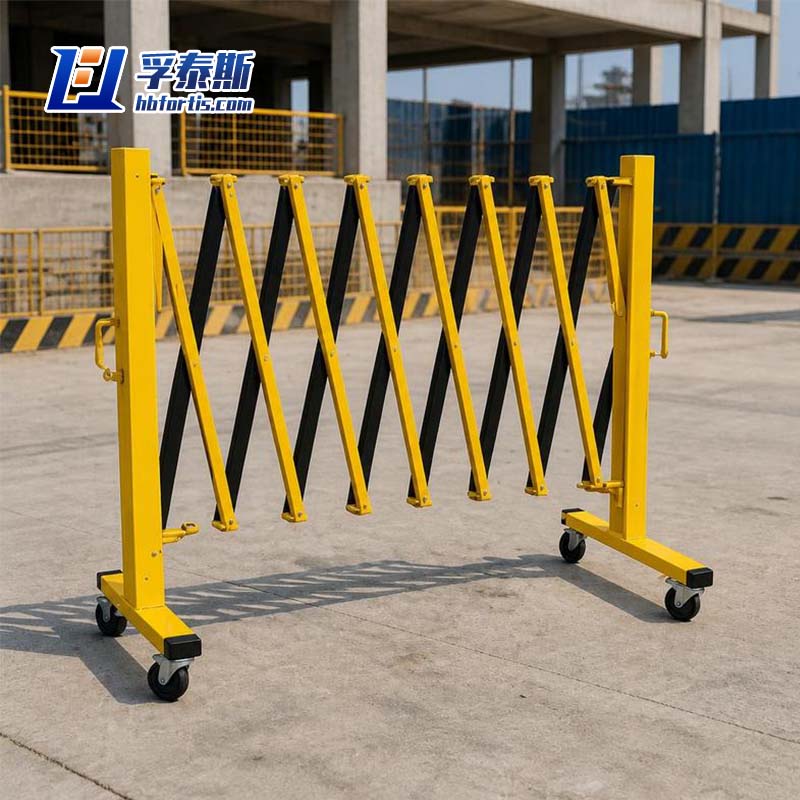
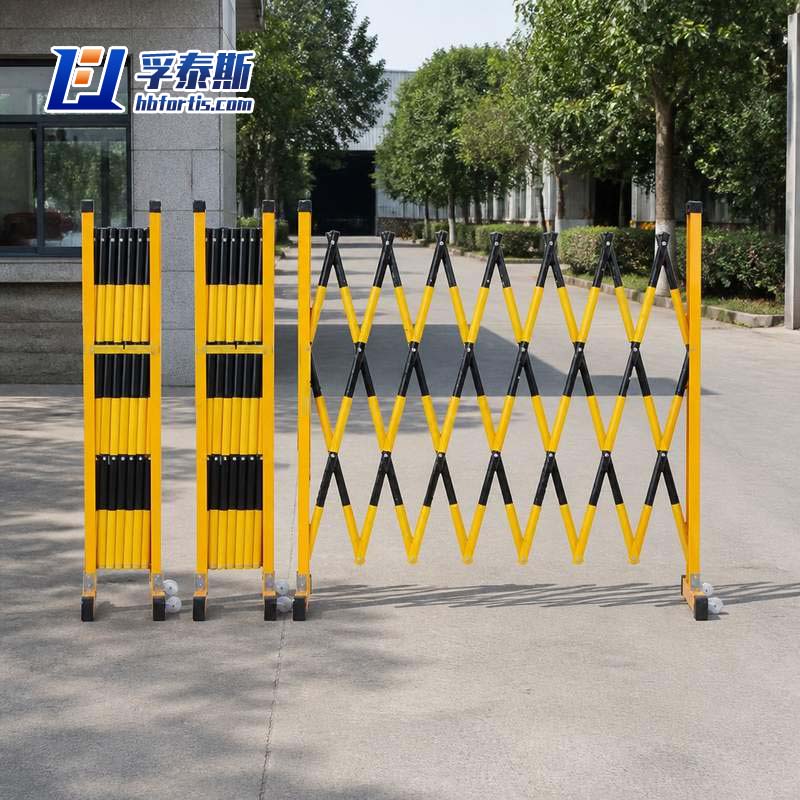
As a factory-direct FRP fence manufacturer and exporter, we supply corrosion-resistant, non-conductive fiberglass fencing built for demanding environments — coastal salt-air perimeters, chemical processing plants, solar farm boundaries, wastewater treatment sites, and marinas. Because we control production in-house, buyers get consistent resin formulation, customizable pultrusion profiles, UV-stabilized finishes, and reliable bulk lead times without middleman markups. Whether you need standard panels or project-specific dimensions, our team supports OEM/ODM orders, sample verification, and export documentation for global delivery.If your project site eats through metal fencing, FRP is the practical answer. We manufacture fiberglass-reinforced polymer fence systems that resist rust, chemicals, salt spray, and UV exposure — while staying electrically non-conductive for solar and substation perimeters. As a direct factory exporter, we handle custom heights, colors, mesh spacing, and mounting options, then ship worldwide with full export support. Tell us your application and target quantity, and we will return a clear factory quote fast.

Folleto de productos de Hebei Fortis Technology Co., Ltd
Product Advantages
Zero Maintenance Requirements Reduce Long-Term Labor Costs
FRP fence never needs repainting, rust treatment, or galvanizing touch-ups. A simple water rinse restores its appearance. For facility managers overseeing thousands of meters of perimeter fencing, this eliminates recurring maintenance budgets, scaffolding costs, and production downtime associated with metal fence repair.
Electromagnetic Transparency Benefits Sensitive Installations
Unlike metal fencing, FRP fence does not interfere with radio frequency signals, radar, or magnetic fields. This property makes it ideal for airports, telecommunications sites, research facilities, and MRI enclosures where signal transparency is mandatory. Metal alternatives in these locations require expensive engineering compromises.
Custom Pultrusion and Modular Design Fit Any Perimeter Layout
As a factory-direct supplier, we produce FRP fence posts, rails, and mesh panels in custom lengths, wall thicknesses, and resin systems. Modular connectors allow quick adaptation to slopes, corners, gates, and existing structures. Buyers receive engineered kits rather than generic rolls, reducing waste and installation errors.
Chemical and Temperature Resistance Suits Extreme Industrial Environments
FRP fence withstands exposure to hydrochloric acid, sulfuric acid, caustic soda, and many solvents that would destroy metal or wood fencing. It also performs reliably in temperature ranges from -40°C to 80°C without becoming brittle or losing structural integrity, making it suitable for mining, refining, and cold-storage facilities.
Application Scenarios
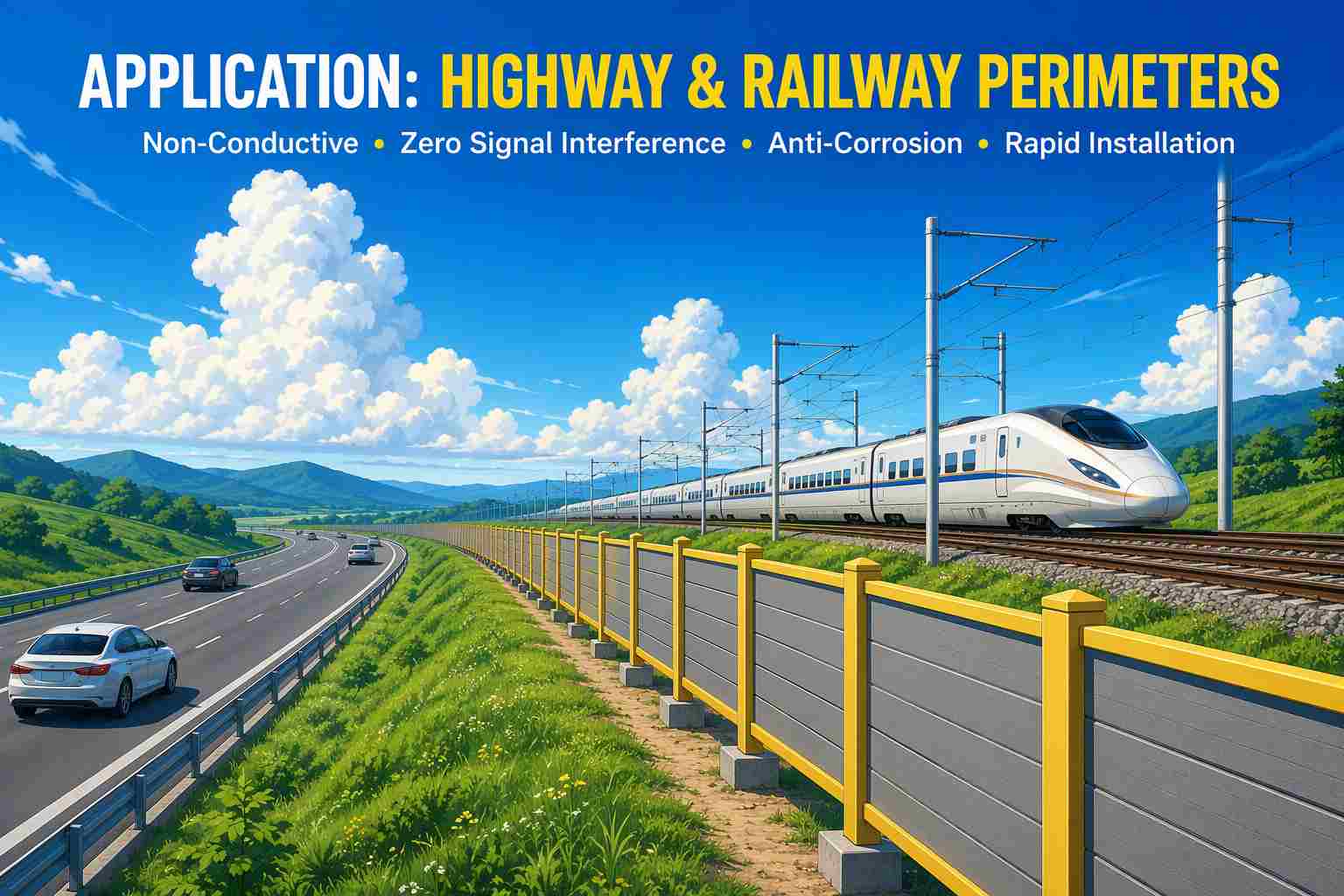
FRP fence is used along highway and railway perimeters as a durable, low-maintenance barrier that can be installed in long continuous runs. The panels are lightweight, non-conductive, and resistant to vehicle exhaust, road salt, and vibration, and they can be assembled with standard hand tools without welding or hot work. It solves the problem of steel fencing corroding from de-icing salts and requiring lane closures for repainting or replacement, and it avoids the signal interference that metal fencing can cause near railway traction power and signaling systems. The real value for transport authorities is faster installation during short possession windows, fewer maintenance callouts, and a perimeter that maintains structural integrity in high-wind and freeze-thaw conditions.
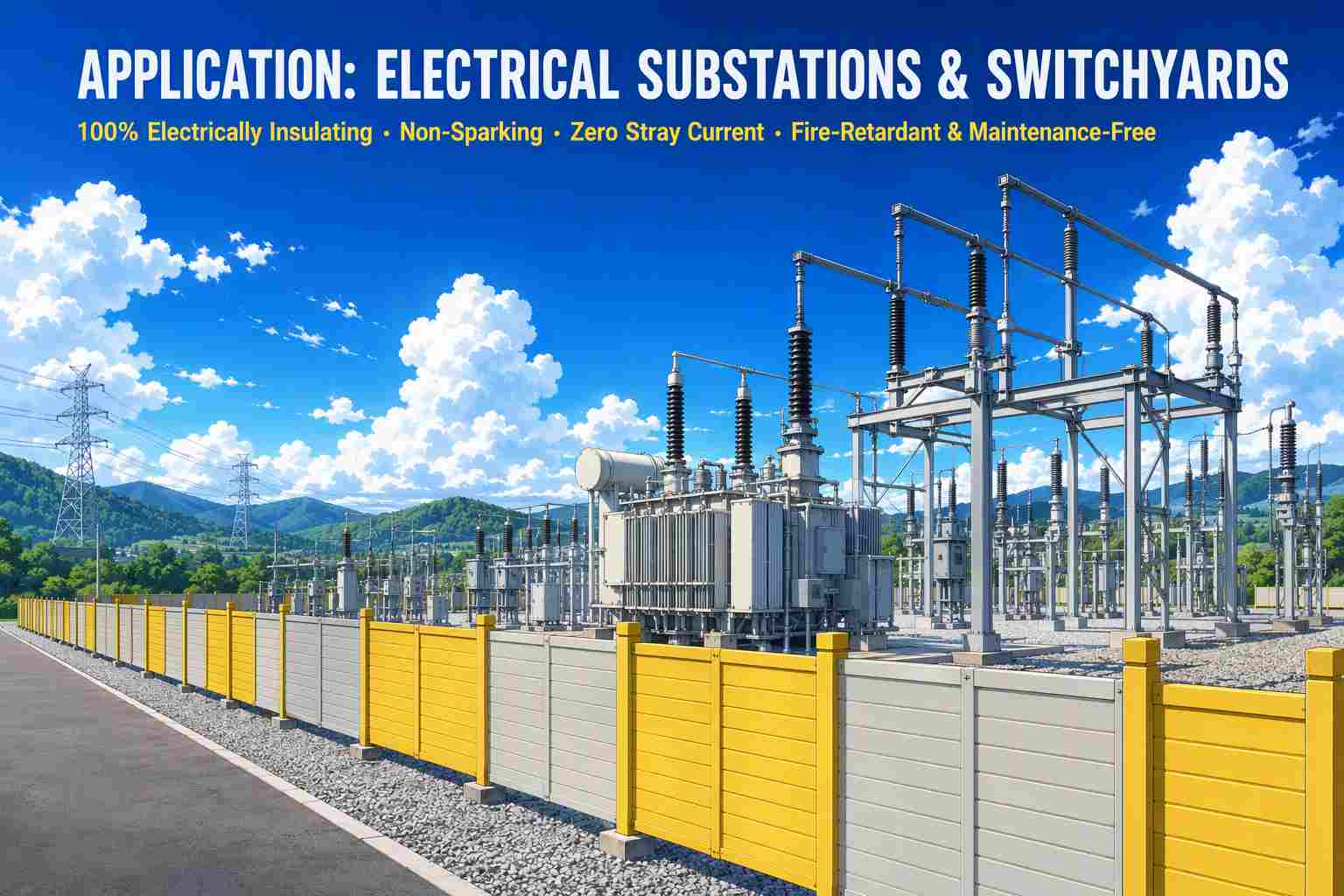
FRP fence is deployed around electrical substations, switchyards, and battery storage sites as a safety perimeter that is electrically insulating and non-sparking. The fence is made from non-conductive fiberglass profiles, often with fire-retardant resin, and is installed on independent posts to avoid creating a grounding path. It solves the serious problem of metal fencing conducting stray current, creating shock risk for personnel, and interfering with protective relaying and grounding design. The practical value is compliance with utility safety specifications, reduced risk during live-line maintenance, and a fence that does not require periodic rust treatment, which lowers long-term maintenance costs and avoids hot-work permits inside energized facilities.
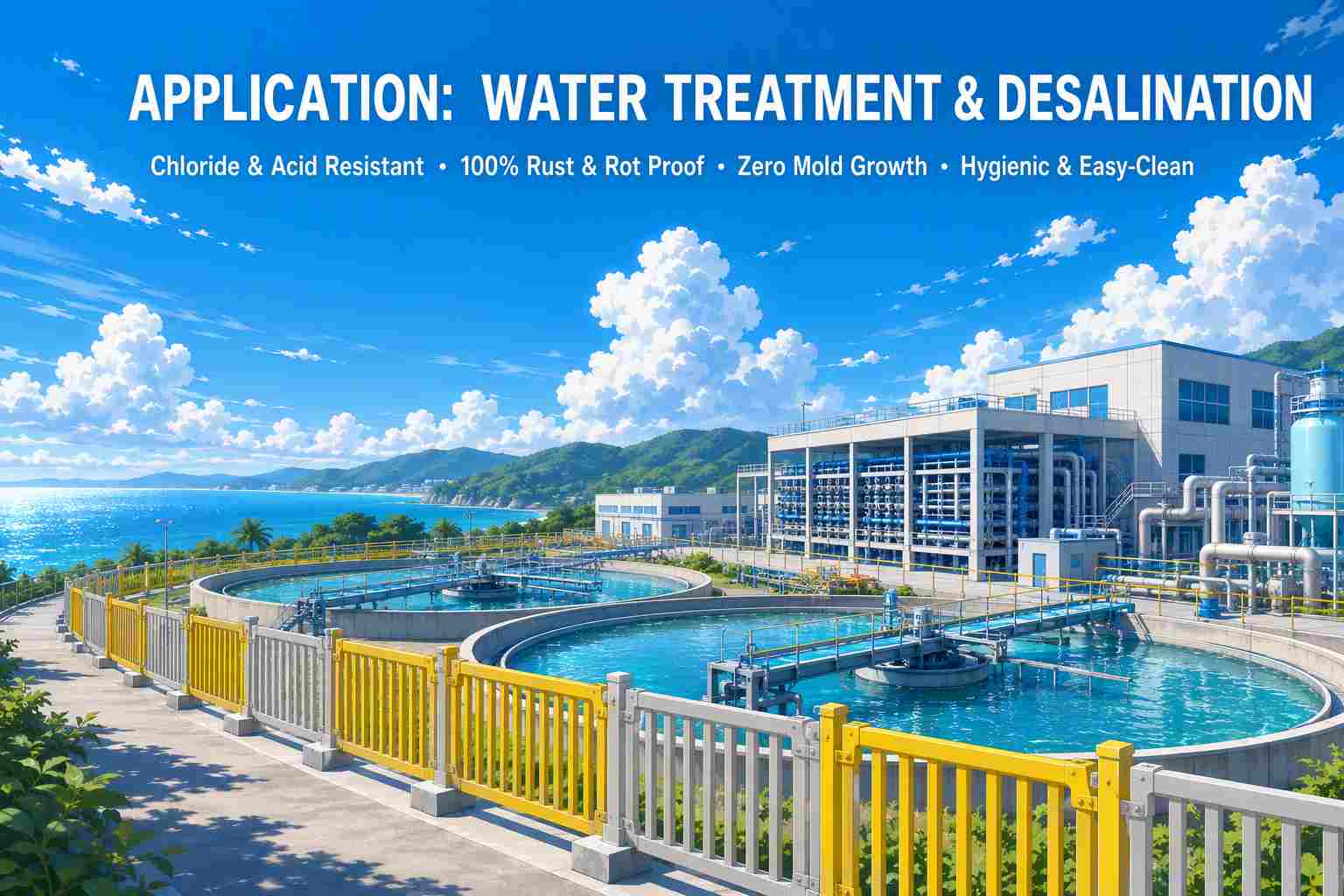
FRP fence is installed around water treatment and desalination plants, including clarifier areas, chemical storage zones, and membrane buildings. The fence resists chlorides, acids, and constant moisture, and it will not corrode, rot, or support mold growth like wood or coated steel. It solves the problem of conventional fencing failing rapidly in aggressive chemical and humid environments, which creates security gaps and repeated replacement costs. The real value for plant operators is a perimeter that maintains security and appearance in harsh conditions, reduces shutdown time for fence repairs, and supports hygiene and safety audits because it is easy to clean and does not harbor bacteria or rust particles.
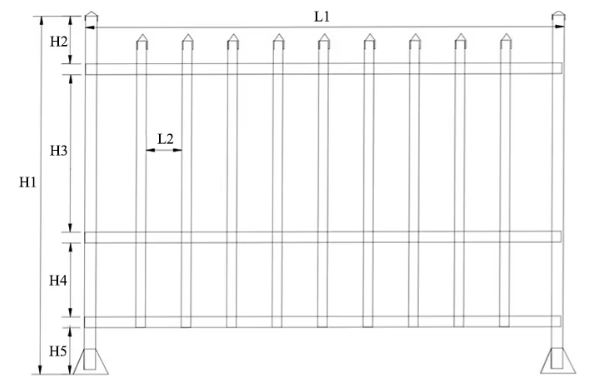
Parameter Specifications
|
|
||
|
Model |
Dimension(mm)H1×H2×H3×H4×H5 |
Dimension(mm)L1×L2 |
|
FT-F |
Customized |
Customized |
Productos relacionados

Fiberglass GRP FRP Fence for Industrial Parks from China Direct Factory Supplier
China factory-direct FRP fence exporter. Corrosion-proof for coastal farms, chemical plants & solar sites. Bulk supply, fast shipping. Get a quote today.

FRP Fence for Solar Farms & Coastal Resorts | China Factory Exporter
China factory exporter of FRP fence for solar farms, coastal resorts, and highway perimeters. Direct supply, custom colors, UV-stable fiberglass. Request a quote.

Fiberglass GFRP FRP Fence for Chemical Plants Coastal Warehouses to made in China
Heavy-duty FRP fence panels resist salt spray, acids, and UV rays. Ideal for perimeter security in wastewater treatment, marinas, and power substations. 25-year service life. Get layout-based quote.

Plantas de aislamiento de barandillas extensibles de FRP de fibra de vidrio GFRP para zonas de traba
Barandilla extensible de FRP de alta resistencia para sitios de construcción, carreteras y zonas industriales. Resistente al óxido, ligero y portátil. Longitud ajustable de 1 a 5 m. Anti-UV, no conductor. Precio directo de fábrica. ¡Solicite una cotización ahora!
Contáctenos de inmediato para analizar los requisitos de su proyecto de producto.
Navegación
Navegación
Contáctanos
Telf.: +86 189 3266 2725
Correo electrónico: venta@hbfortis.com
Agregar.: No.8-1, calle Zhenxing, ciudad de Matun, condado de Zaoqiang, ciudad de Hengshui, provincia de Hebei
Ponte en contacto
Ponte en contacto